Key Loyalty Metrics with Benchmarks [KPI]

[Part of the KPI and insight framework: “Loyalty Best Practices [KPI]” for Actionable Insight]

When we engage and consult companies, we have realized, that they are not tracking some of the most basic loyalty metrics. We often find that even established brands overlook the fundamental metrics that define loyalty success. In addition, those that may measuring some of these metrics are not sure how to benchmark those metrics to gauge how well they may be doing and what they need to do to drive strategic growth.

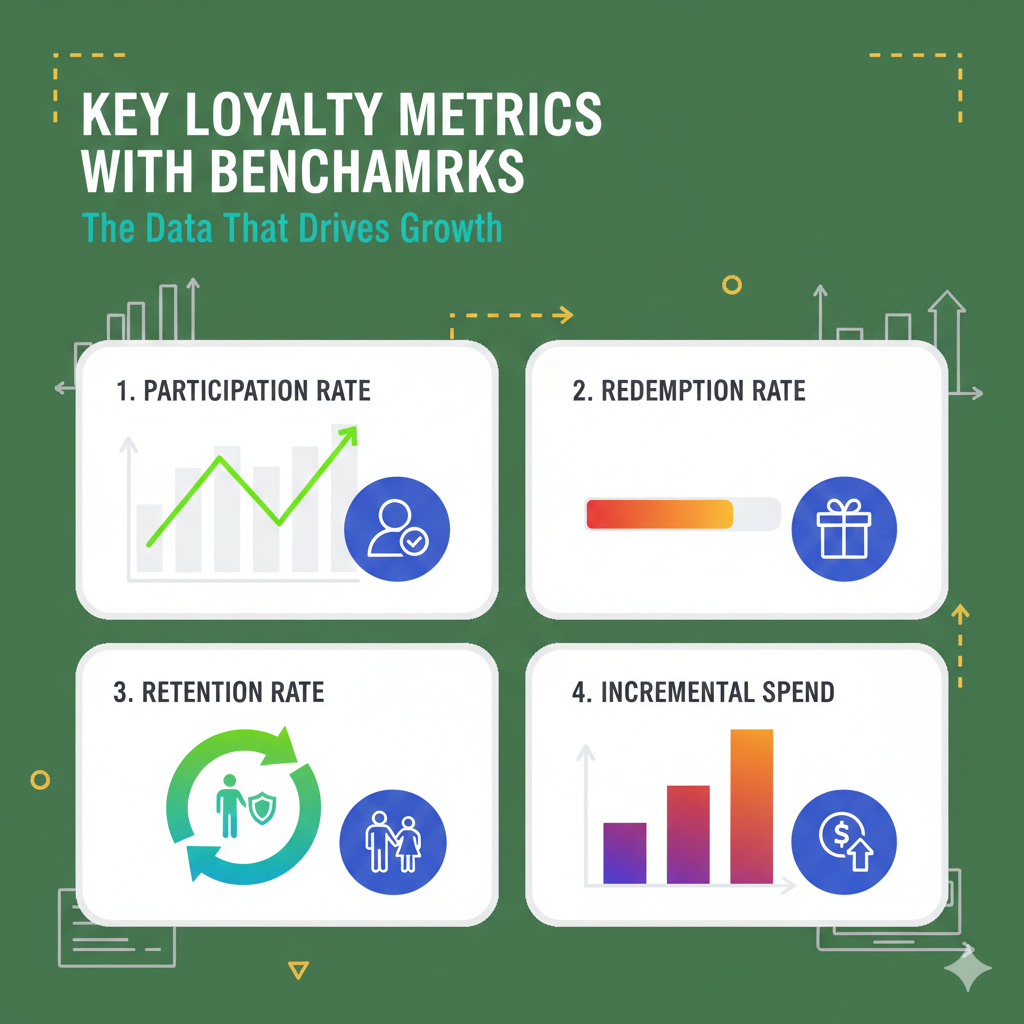
We have therefore as a starting point identified a few Key Loyalty Metrics that every loyalty manager should track to measure true performance.

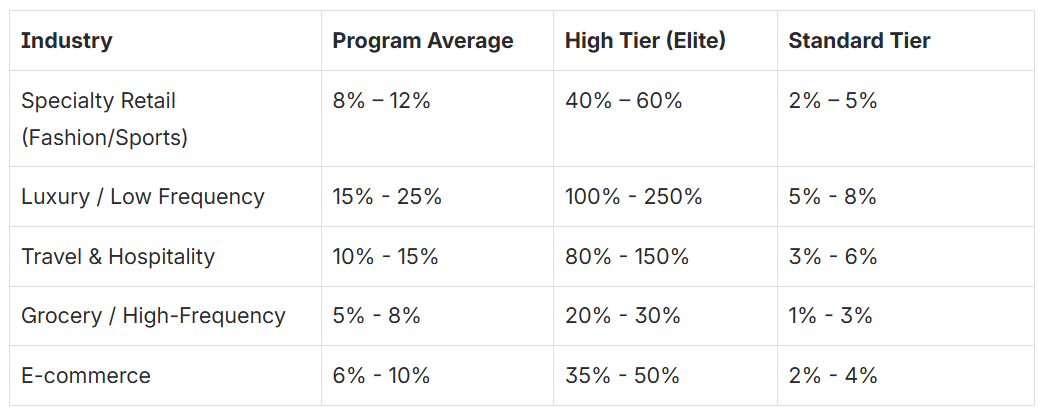
For each metric, we have provided a definition, industry benchmarks, and a segmentation breakdown (comparing high-value vs. low-value members).

Do note that many public "benchmarks" are inflated because they often come from vendors who only track active clients or use self-reported data from successful programs.

For the benchmarks we have used a conservative, reality-checked calibration. These numbers represent the industry "middle-ground", accounting for "loyalty fatigue" where consumers are signed up for too many programs to stay active in all of them.

Every company, industry, region and purchase behaviour is different, but this should be a good starting point to baseline your own efforts to optimize your loyalty approach.

Description, Formula and Benchmarks

Since this is a KPI related best practice focus will be on understanding the metric and providing benchmarks that are appropriately segmented.

#1

Participation Rate (Active Member Rate)

Why it matters: Total enrolment numbers is a superficial metric. Participation rate tells you how many members are actually "alive."

Definition: The percentage of total members who have engaged (earned or redeemed) within a specific timeframe (usually 12 months).

Formula: (Active Members [transacted in last 12mo] ÷ Total Enrolled Members) × 100

Do note that it is critical that you also look at the absolute number of active members and the trend, but for benchmark purposes we need to use a rate as a measure.

It may also highlight you have been too aggressive in getting new members with too little focus in ensuring that those members are active.


Detailed Benchmarks
Retention Rate

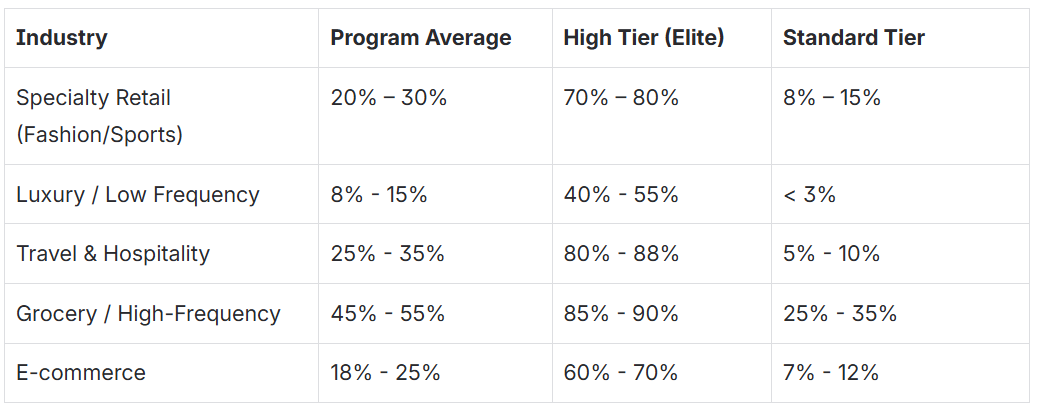
Why it matters: The fundamental purpose of loyalty is to stop customers from leaving.

Definition: The percentage of program members who continue to transact year-over-year.

Formula: ((CE - CN) ÷ CS) × 100 (CE = Customers at end, CN = New customers, CS = Customers at start)

Do note that you typically want to do this from a yearly perspective where you look at the 1st January to 31st of December.

Detailed Benchmarks

Incremental Spend (Lift / ROI)

Why it matters: This proves the program is making money, not just giving away margin.

Definition: How much more a loyalty member spends compared to a non-member (or compared to their own pre-loyalty behavior.

It may be difficult to measure this appropriately since purchases by non-members are typically anonymous. However, you may be able to look at sizes of purchases, certain programs have non-member tiers that enable a comparison, or surveys.

Detailed Benchmarks

Redemption Rate

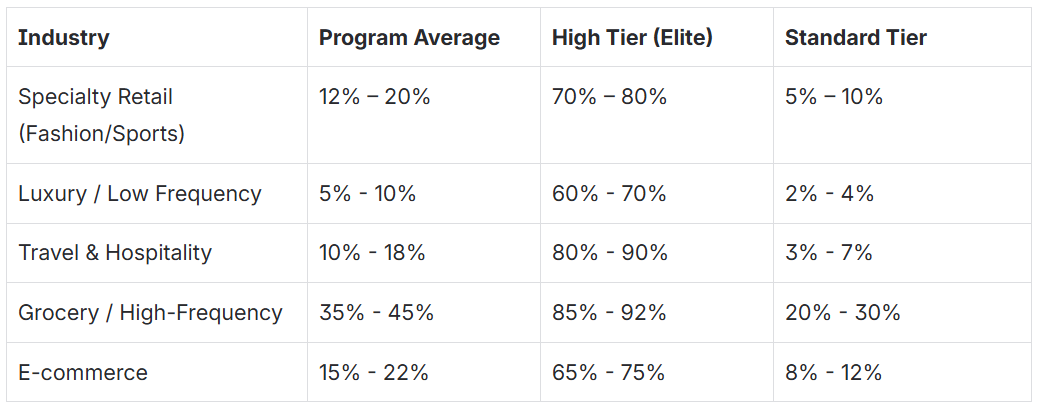
Why it matters: On of the best indicator of engagement. If members aren't redeeming, the program isn't influencing their behaviour.

Definition: The percentage of issued points that are actually converted into rewards.

Formula: (Total Points Redeemed ÷ Total Points Issued) × 100

Detailed Benchmarks

For data references, sources and calculation methodologies please reach us and we can provide these details that may allow you to better understand how to apply these in your context

Loyalty Best Practices

Our Loyalty Best Practices consist of executable loyalty practices to drive specific KPIs of the loyalty program. The loyalty best practice database contains many different types of practices that you can use to deliver the right results for you. Please let us know if you are interested in receiving information about other loyalty best practices or have a more in-depth discussion on how the above loyalty best practice can be utilized in your organisation.

Thank you! Your submission has been received!
Oops! Something went wrong while submitting the form.